

.jpg)


My Chickasaw Plum Snag is a Habitat Tree

Half of my two story Chickasaw plum tree (Prunus angustifolia) died almost two years ago yet the rest is still hanging in there. This past winter I planted a handful of Chickasaw plum seedlings around my rewilded yard to cover my bases if the other half dies - including in my right-of-way strip where I’m working to replace non-native Kousa dogwoods.
Chickasaw plums are a fabulous keystone wildlife habitat plant in so many other ways – from the early spring flowers that attract hordes of native pollinators to the small fruit eaten by wildlife, to the thorny branches that birds use to park their fledglings in when they go out foraging.
Chickasaw plum rank only second to oaks and host around 317 species of butterflies and moth caterpillars in Georgia according to the National Wildlife Federation site ranking native plants by this metric.
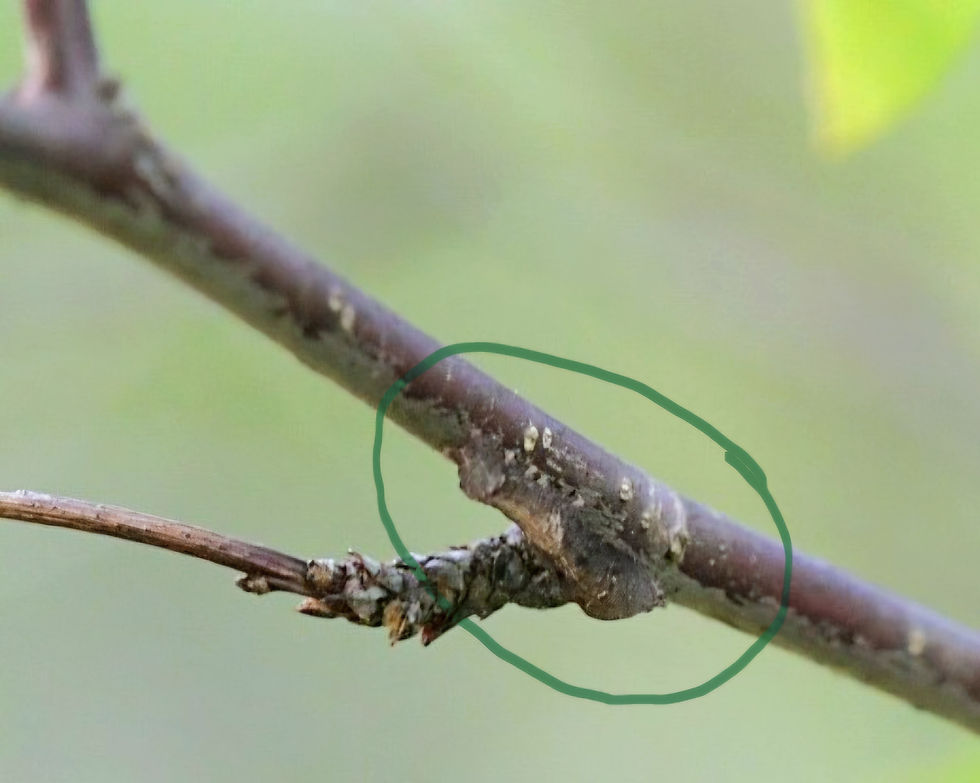
The dead half of my Chickasaw plum is just as popular with wildlife as the living half. A tree is designed to defend itself from anything trying to get in and destroy it. But when that tree dies, insects and fungi can move in followed by other wildlife that will use it for habitat. Insects, squirrels, and chipmunks feed on the fungus and moss growing on my tree, and all sorts of wildlife forage for the insects which is made up of a high percentage of beetles who make a home in the decaying wood. Birds still use the dense, thorny branches for shelter and hummingbirds seem to love using the dead branches as a perch.

A dying or dead left standing like mine is considered a snag and is a foundational structural element in a forest ecosystem. A more appropriate name might be a habitat tree or even a bird hotel. About 70-90 different birds rely on dead trees for a home, cover, reproduction, and foraging for food.
Woodpeckers depend on snags to complete their lifecycle - and just like Chickasaw plums, woodpeckers are also keystone species and play an outsized positive role in supporting the ecosystem where they exist. Woodpeckers basically have a chisel on their face and drill out holes in deadwood to get to all those insects and to create nests. Their holes create habitat for other wildlife. I haven’t seen a pileated woodpecker yet, but red-bellied and downy woodpeckers visit my Chickasaw plum. They are both common urban birds with a stable population.
Snags are essential to a forest ecosystem and can offer the same ecological services in a residential yard on a smaller scale. If we look at our yard from a bio-productive perspective which is asking whether what we’re doing is supporting the natural processes going on, letting snags naturally decay is a way to embrace decomposition which is a primary ecological function that helps nutrient cycle organic matter. The impact on local wildlife would be immense and help the alarming bird and insect decline happening now if each snags were common in residential landscapes.
Once considered a hazard to be removed without question the idea of leaving a snag standing is catching on as the value they offer wildlife becomes more well known. As the yard aesthetic preferences shift from a tidy 1950s lawn focused suburbia look to an ecologically aligned natural look the structural beauty of decay is becoming popular. At the Philadelphia Garden show, one of the most prestigious horticultural events in the world, a popular winning garden design was centered around a snag!

If a tree dies it can simply be turned into a habitat tree by taking out the crown where it branches out. My Chickasaw snag is made up of multiple thinner stems so I feel comfortable leaving them. Dead trees can remain standing for decades before naturally falling but in smaller residential lots, the remaining trunk still needs to be short enough to be in a safe fall zone. If there are ordinances against snags this is a perfect opportunity to raise awareness about what snags are – and advocate for changing outdated rules to be more ecologically forward to make snags more commonplace in residential landscapes.

In early spring I decided to use my Chickasaw snag as a sturdy trellis and planted multiple slips of habitat supporting native vines at the base of it. I included coral honeysuckle (Lonicera sempervirens), passionflower (Passiflora incarnata), crossvine (Bignonia capreaolata), and Trumpet Vine (Campsis radicans). A yellow passionflower (Passiflora lutea) popped up nearby. Vines are by definition abundant. I know it’s a bit excessive to plant multiple in the same space, but I want to ensure at least one vine scrambles up the branches to create a habitat focal point and I'm not sure which one is best! I can always edit out what I don’t want…

Note: There are no affiliate links in this blog – I enjoy the freedom that comes from speaking my mind and elevating those helping nature in some way. The highlighted text throughout the post might be references, details, explanations, worthy organizations and businesses, or examples that I think might be helpful 😊